We can’t predict when a disaster or accident may happen, but we can get ourselves prepared and keep our families and businesses safe with a disaster plan.
- Talk with your family and pick a family rally spot.
- Put together a home disaster kit and plan for evacuations.
- Update everyone’s contact information, back up your data, photograph your possessions, and copy important papers (wills, trusts, deeds, mortgages, utility, and financial statements, etc).
We react more quickly if we think ahead about difficult situations. People who plan ahead for emergencies and have supplies ready will get through disasters and recover more quickly.
Special Needs Program
In Florida, everyone is vulnerable to severe weather, accidents, and other emergencies. Individuals with special health and medical needs are especially vulnerable.
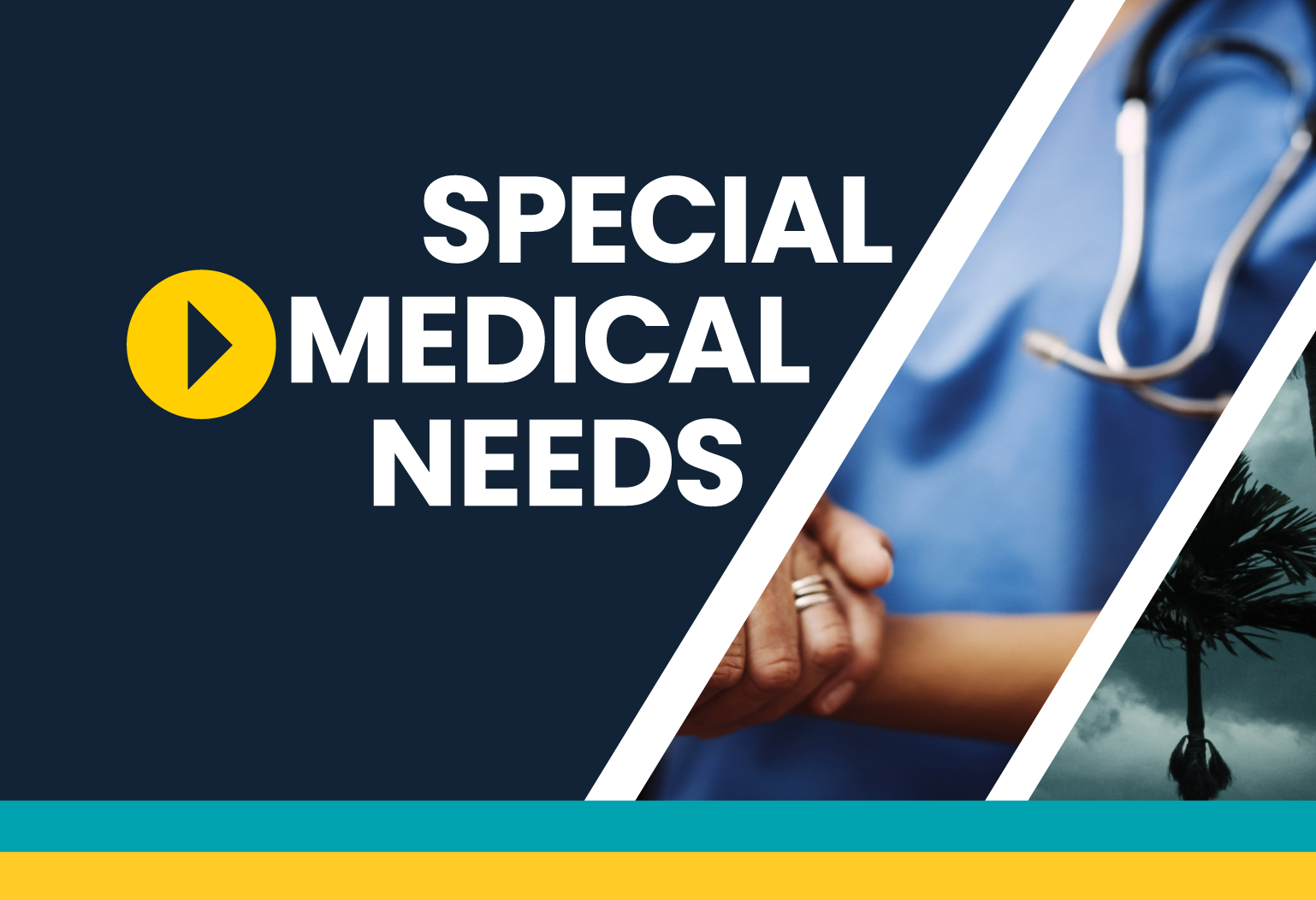
The program supports people living with physical, mental, or serious medical conditions that require observations, assessment, or maintenance, but who are not ill enough for a hospital.
Register Today for the Special Needs Shelter
All forms are confidential and emergency management staff review registrations once a year.
Remember to tell your physician, health care provider, home health agency, oxygen company, and medical equipment provider that you are registered for the special needs shelter.
18900 Cortez Blvd.
Brooksville, Florida 34601
352-754-4083
The special needs shelter is under the supervision of a health department registered nurse and is staffed by medical professionals, consulting physician, and volunteers.
Special Needs Registry
Preregistration is important so emergency responders can ensure space is reserved for those with the greatest need.
- Special needs shelter is voluntary. It is one of many options you have to shelter at home, with neighbors, friends, and relatives, or to evacuate.
- The shelter provides a safe and secure environment, but does not take the place of a hospital, assisted living facility or long-term care facility.
- Special needs shelter helps with transportation and shelter during emergencies and disasters.
- A caregiver should accompany each person who has a medical or health care need.
- Please bring all of your medical equipment, oxygen, medications, and supplies.
Business Disaster Planning
A disaster of any size can cause long-term impacts to businesses and the economy. Reduce the impact of disasters by having a business continuity plan in place and help employees get prepared. It’s important to consider how disasters affect employees, customers, and workplaces.
Whole Community Preparedness
We all share in the responsibility to be prepared, because no should do it alone. FEMA’s Concept of Whole Community involves everyone — businesses, volunteers, neighbors, governments, media and social media, educators, not-for-profits, residents who are vulnerable to disasters, young people, and elders.
- ESF-8 Health and Medical Working Group
- Tampa Bay Health and Medical Preparedness Coalition
- FEMA Whole Community Preparedness Activities
Disaster Guide for Day Cares
Disasters affect thousands of Floridians and children are at extra risk of physical and mental impacts. The Child Care Emergency Response Plan helps child care centers prepare for emergencies, disasters, and accidents. Print the guide, fill in the forms, train your staff, and practice often.
- Emergency Response Guide Master Plan, January 2018
- Emergency Response Guide, Fillable Form – 2015
Communities Working Together for Children
Health care, schools, and communities are working together to help children feel safe, secure, and resilient. Community resources and school curriculum help the whole community to get prepared, make plans, assemble kits, and stay informed.
Resources
Use these helpful links to help prepare your family, business, children, and elders with special needs: